
What’s happening behind the scenes
Some of the most important work on a home project happens when there is nothing new to see. Here’s what’s going on and what to expect.
During construction · 4 min read
When you picture progress on a construction project, it’s natural to think about the things you can see.
The foundation is poured. Walls go up. Cabinets arrive. Tile is installed. Paint changes the feel of a room almost overnight.
Those milestones are exciting because they make progress easy to recognize.
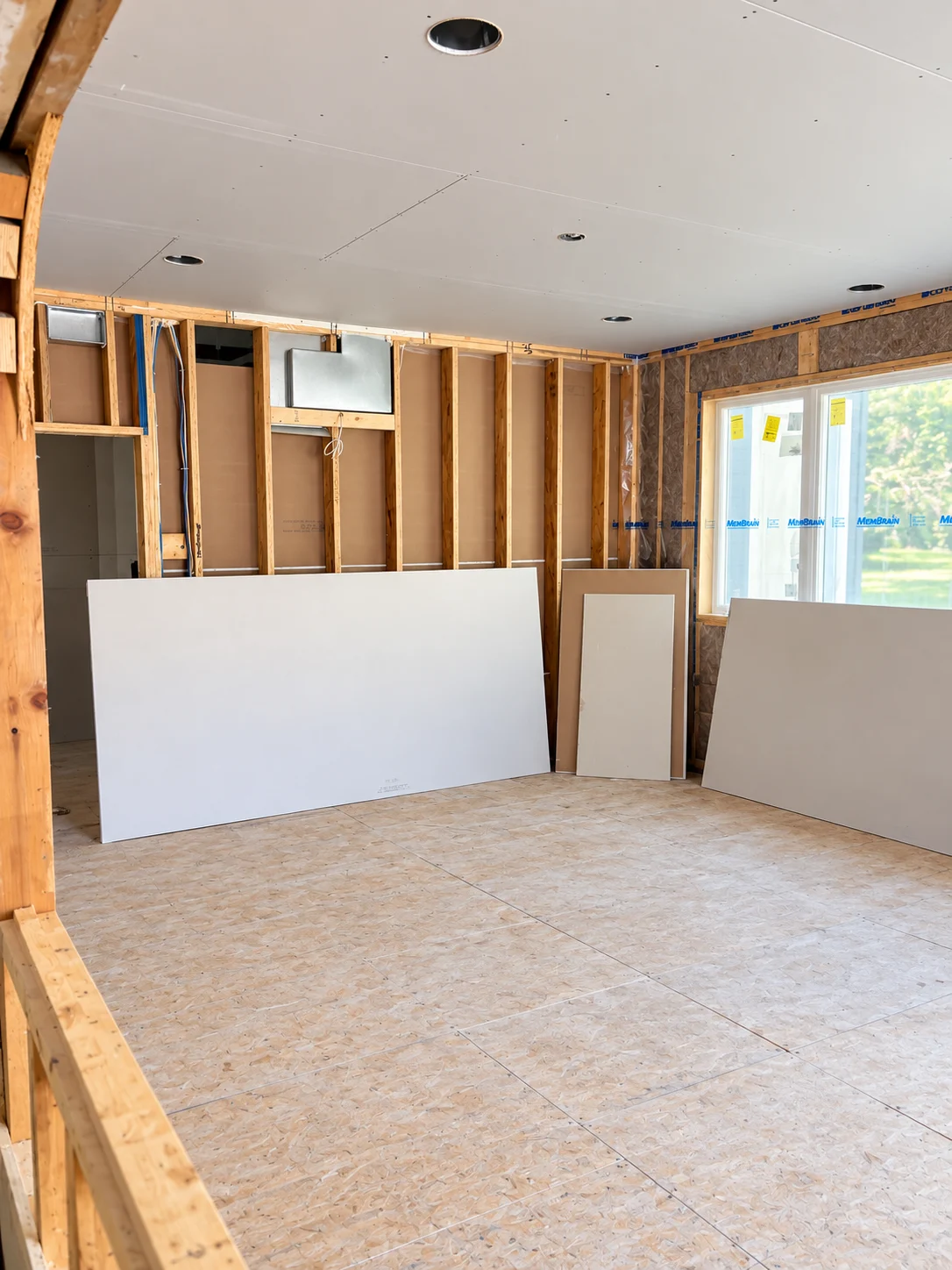
But some of the most important work on a custom home, addition or renovation happens when there isn’t much new to photograph.
A construction project is a chain of connected decisions
Very few decisions during construction exist on their own.
Moving a shower niche may affect plumbing and tile.
Changing a cabinet detail could involve the cabinetmaker, electrician and countertop fabricator.
Adjusting the location of a doorway may affect framing, flooring, trim or furniture placement.
That doesn’t necessarily mean something has gone wrong. It’s simply part of building a home where many different systems, materials and trades have to come together correctly.
The important part is making sure a change gets communicated to everyone it affects.
For homeowners, this is one reason it helps to know when each decision needs to be finalized. A seemingly small change made late in the process can have a much bigger ripple effect than the same decision made earlier.
Why there may be days when the jobsite looks quiet
Construction progress isn’t always visible.
Sometimes the next trade is waiting for a product to arrive. A floor may need another day to cure. Measurements may need to be confirmed before something is ordered. A supplier may be verifying availability before the schedule can move forward.
There may also be work happening completely away from the jobsite:
- Confirming deliveries and lead times
- Coordinating upcoming trades
- Reviewing plans and measurements
- Following up on permits or inspections
- Answering questions from subcontractors
- Checking selections against drawings
- Updating the schedule when something changes
A day without dramatic visual progress can still be an important day for the project.
Sometimes slowing down for a day prevents a much bigger problem later.
Scheduling is rarely as simple as putting dates on a calendar
One of the harder things to see from the homeowner side of a project is how dependent each phase can be on the one before it.
The electrician may need framing complete before rough-in work begins. Drywall needs inspections completed first. Cabinets may need to be installed before countertops can be templated. Tile, flooring, trim and plumbing fixtures all have their own sequence.
Then add material lead times, inspections, weather and the schedules of multiple skilled trades.
That’s why a good construction schedule is actively managed throughout the project rather than created once and followed without adjustment.
The goal isn’t to pretend the schedule will never change. It’s to look ahead, communicate changes early and keep one adjustment from unnecessarily affecting everything that comes after it.
What good project coordination should look like
As a homeowner, you shouldn’t be expected to manage every moving part yourself.
But you should have a sense that someone is.
Good project coordination often looks fairly uneventful from the outside. Questions are answered before the next trade arrives. Materials are there when they’re needed. Everyone is working from the current plans. Changes are communicated instead of discovered after the fact.
And when something unexpected happens, you should understand what it means for your project and what happens next.
That doesn’t mean there will never be delays, surprises or decisions to work through. Construction involves too many variables for that.
What matters is how those moments are handled.
Communication matters just as much when there isn’t a problem
Homeowners understandably want to hear from their builder when there’s an important decision to make or an issue to solve.
But regular communication matters during the quieter stretches, too.
A helpful project update might tell you:
- What happened this week
- What decisions were finalized
- What is coming next
- Whether anything is waiting on a material, trade or approval
- What decisions you need to make and when
- Whether anything has changed from the original plan
That kind of communication helps keep expectations clear and gives you a better understanding of where the project actually stands.
What homeowners can do to help the process
You don’t need to understand every technical detail of construction to be an engaged homeowner.
A few things can make the process easier for everyone involved:
- Ask when decisions need to be made. Knowing the deadline is often just as important as knowing the options.
- Avoid treating late changes as small changes. Ask what else may be affected before making the final call.
- Keep asking questions. If something doesn’t make sense, ask. Clear information is much easier to work with than uncertainty.
- Pay attention to what’s coming next. Understanding the next few steps can make selections and decisions feel much less overwhelming.
- Expect some adjustments. A changing schedule doesn’t automatically mean a poorly managed project. What counts is why it changed and how the builder is handling what comes next.
The work you may never see
When a project is finished, most of the behind-the-scenes work disappears.
You’ll see the cabinetry, flooring, windows, tile and trim. You probably won’t remember the phone call that confirmed a delivery, the measurement that was checked one more time or the schedule adjustment that kept three different trades moving in the right order.
And ideally, you shouldn’t have to.
A well-run project allows you to stay informed without having to personally manage every detail.
The finished home may be what everyone sees, but getting there takes much more than the work happening in front of the camera. It takes planning, communication, coordination and a lot of attention to the details that connect one step to the next.
Questions to ask your builder about communication
- Who will be my main contact day to day?
- How often will I get project updates, and in what form?
- How will schedule changes be communicated?
- How will I know when a decision has a deadline?
- What happens if a material or product is delayed?
Curious how a project like yours would run?
We’re happy to start with a conversation about your home and what you have in mind.